Welcome to JobHub Scotland’s January Labour Market Insight
In January, Scotland’s labour market continues to show resilience amid economic moderation, with persistent wage growth and low unemployment as key themes. However, employers and jobseekers are adapting to an environment shaped increasingly by artificial intelligence, digital transformation, and sectoral shifts.
Scottish Labour Market Snapshot
- Employment rate: ~74.9% – broadly steady and aligned with the UK average in late-2025
- Unemployment rate: ~3.8% – below the UK average (~5.1%)
- Median monthly pay: ~£2,560 – modest growth year-on-year
- Claimant count unemployment: ~3.5% – recent monthly trends show stability
Bottom line: Scotland’s labour market remains comparatively strong with low unemployment and continued wage growth, even as broader economic indicators point to slower headline growth.
Key Trend: AI Continues to Reshape Recruitment and Work
Across sectors, AI is no longer experimental. It’s mainstream in how jobs are posted, matched, and filled:
- Employers increasingly use AI tools to optimize job descriptions, screen candidates, and automate routine HR tasks.
- Jobseekers are tailoring CVs to pass AI/ATS screening systems, focusing on relevant skills and keywords.
- AI is also impacting labour dynamics, contributing to new job categories while altering traditional roles across industries.
Regional Overview
Central Belt (Glasgow & Edinburgh)
Demand continues for data analysts, software developers, cybersecurity specialists, and digital transformation roles as tech firms and financial services scale AI capabilities.
Aberdeen & North-East
Energy transition remains key: AI tools support predictive maintenance and renewables optimisation, creating roles in support of net-zero initiatives.
Highlands & Islands
Tourism & hospitality increasingly adopt AI tools for customer service automation and staffing optimization boosting efficiency in seasonal hiring.
Borders & South-West
Manufacturing and logistics are integrating automation and AI-assisted quality control, pushing demand for technicians who bridge physical and digital skills.
Top Sectors Hiring in January
- Renewable Energy:
AI-driven modelling and smart grid roles are expanding. - Technology & AI Development:
Universities and startups continue partnerships, generating positions in machine learning, data science, and ethical AI governance. - Health & Social Care:
Digital health platforms and AI scheduling tools are creating roles for tech-literate support staff. - Construction & Trades:
AI planning and digital project tools are increasing demand for workers who pair hands-on skills with digital fluency. - Retail & Tourism:
Automation and AI-based customer experiences (e.g., chatbots, dynamic pricing) are changing hiring patterns for customer-facing roles.
AI’s Impact on Recruitment
For Employers
AI helps to:
- Improve job adverts to attract better matches.
- Automate CV screening and candidate matching.
- Use predictive analytics to support hiring decisions.
- Free HR teams to focus on strategy, not admin.
Best practices:
- Combine AI tools with local expertise (e.g., JobHub Scotland) for community-focused hiring.
- Invest in AI literacy and ongoing digital skills development.
- Prioritise human elements such as empathy, leadership, creativity that AI cannot replace.
For Jobseekers
AI isn’t a threat — it’s a skill multiplier:
- Craft ATS-friendly CVs using industry keywords.
- Use AI mock interviews to sharpen delivery and confidence.
- Focus on high-growth sectors and future-proof roles (e.g., data science, AI support).
- Leverage local platforms that combine smart tech with personal insight.
Final Thought
Scotland’s labour market at the start of 2026 remains stable on the surface and evolving beneath it. Employment levels are holding, unemployment is low, and wages are rising but AI and automation are quietly redefining how jobs are found, filled, and performed.
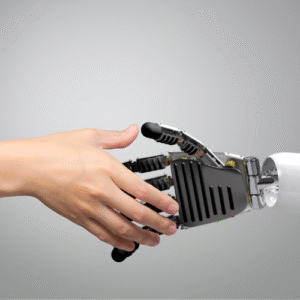
The future of work here won’t be solely human or artificial, it will be both. Those employers and jobseekers who embrace this hybrid reality will be best positioned to lead Scotland’s next chapter of growth.